
Midnight Mass
When Christ comes, Isaiah 9:2-7 tell us: misery will end, the people will be freed, enemies will be vanquished. Yet, 2,000+ years on, there are an awful lot of people still struggling, still living in darkness.
Isaiah imagined that the Christ would be a ruler who would wield authority and the gospel, Luke 2:1-14, begins with those in authority: the emperor, the governor, the powerful but then presents us with their opposite: a tiny town in a regional backwater, a struggling family, a bunch of labouring shepherds and a vulnerable newborn. Luke seems to be implying that these people, not those in authority, are the ones whom God will use to change the world. This insignificant child’s birth signals how this might happen: around him a new community is created by bringing together those whose lives would usually keep them apart. Here, the divine stands in solidarity with the all too human, a bunch of the local, uneducated poor are joined by a group of wise, wealthy foreigners. Here is a radical new way of being in the world; a way in which no one group is privileged over another; a way that reveals what unites us and not what divides us.
This gathering begins with one person, Mary, and slowly spreads bringing in Joseph, animals, strangers, foreigners and, as Jesus grows, will go on to bring the marginalised and the sick together with Roman officials and religious leaders. For us, who know a lot about a world divided, it offers the hope that there is something stronger that unites us if only we would take the same risk that God took, that Mary took, that Christ took, the risk of embracing, learning from and being transformed by others.

Traditional Service of Lessons and Carols
On Sunday 21st December at 6.30pm, make a bee line for church for a traditional service of lessons and carols.
There is no better way to be reminded of the importance of the Nativity than through this familiar selection of readings and music.
Fourth Sunday of Advent
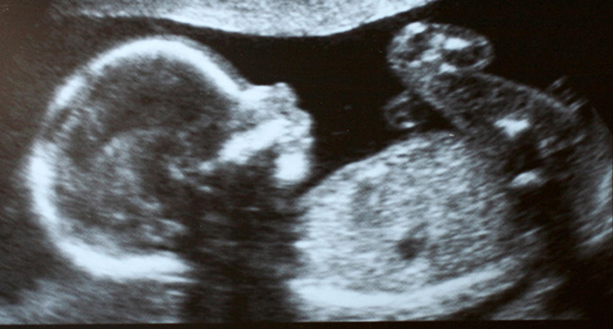
This morning, on the last Sunday of Advent, both Joseph and Ahaz receive a sign from God. Signs give us strength and hope, they show us that we are on the right path. The sign given to king Ahaz in Isaiah 7:10-26 is the same as the sign given to Joseph in Matthew 1:18-25, a newborn child. King Ahaz rejects the sign. He is going into battle he wants a sign of power and might. He wants to know that God will strengthen his army and grant him victory, he wants a sign of power and might. The child is a sign of vulnerability and need.
The sign God gives points towards a choice: we can, like Ahaz, focus on securing our position in the world, we can seek to negotiate with power, to ally ourselves with the rich and the mighty. Or, like Jospeh, we can choose to ally ourselves with the most vulnerable.
We too want a sign, a sign that everything will turn out alright, for ourselves and our families, for our community and our nation, for the world. The sign God sends us to follow is still the same: a child, a vulnerable infant. This is the path God points us towards: to stand with the poor, protect the weak, support and uphold those in need. This is the path that leads us to a future all can share.

Carols by Candlelight
What could be more festive than carols by candlelight?
Bring the whole family down to church on Sunday 14th December at 4pm and prepare yourselves for the celebrations ahead.
No previous carol singing experience required!
Third Sunday of Advent
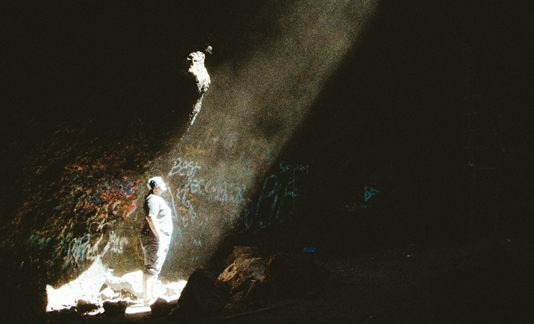
Are you the one who is to come, or are we to wait for another?” In Matthew 11:2-11, John the Baptist is awaiting execution. In this dark place he wonders whether Jesus is the one who will bring God’s light to the world, the one whom Isaiah 35:1-10 promised when his people were also imprisoned. They both long for a time of freedom and flourishing.
There are times in all our lives when we too question what difference Christ makes to the world when suffering and injustice are still to be seen in every land. Yet Jesus tells us: the blind receive their sight, the lame can walk, the dead are raised to life. We are the blind and lame and dying that Christ heals: he opens our eyes and strengthens our hands in order that we can continue God’s work of healing and liberation.
This Advent the question that John asks, Jesus also asks of us: are we the ones who are to come, or should the world for others?

Second Sunday of Advent & Baptism
Today is the second Sunday in Advent, a day when we celebrate the prophets in every generation who call us to a better future. Prophets are not often popular: they insist on telling us things we don’t want to hear; they voice uncomfortable truths; and, most of all, they call us to change. Just so with John the Baptist in Matthew 3:1-12 who warns of “the wrath to come”. He baptises with water but he predicts a baptism of fire. The fire is not punishment for our sins and failings, it is just the inevitable outcome selfish and unethical living, as those living through war and famine and flood know all too well. But the fire of the prophets also offers hope: it burns away all that holds us back to make space for something new to grow and ignites our imaginations so that we can begin to envisage a different future. John calls us to turn around, to turn towards a new future, not on our own but together. As we welcome those to be baptised this morning we remember (and we rejoice) that we are baptised into a community, a community bound together by the fire of the Holy Spirit, the bringer of life. A community charged with reimagining the future. A community called to turn towards that future. A community sent out to live that future into being and bring light and life to the world.
Advent Sunday
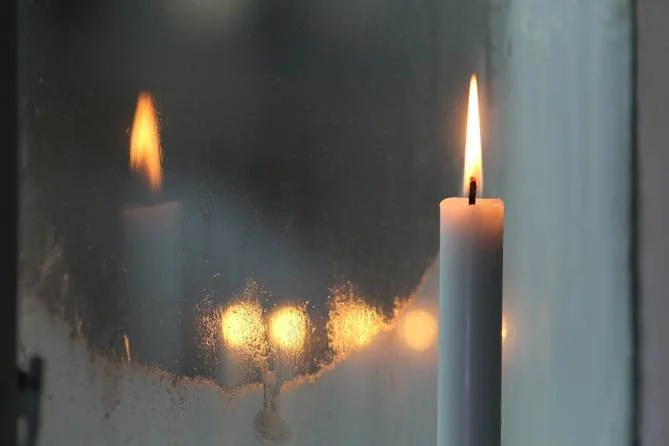
Advent is a time of preparation for the coming of Christ. It is a time of expectation when we wait for Christmas but it is also a time to look forward to the final coming. For Isaiah 2:1-5 this will be time of justice and judgment but also a time of peace which encompasses all peoples and nations. The hope of this day encouraged and comforted God’s people through times of struggle and hardship.
However, Matthew 24:36-44 was written when the hope of Christ coming was diminishing. So Jesus encourages his disciples not to give up hope but to be ready to welcome in the kingdom whenever it comes.
We live between the first and the final coming of Christ. Yet Christ still comes in our ordinary, everyday lives, for “when two or three are gathered in my name there am I, in the midst of them.”
We too are waiting and hoping for justice and peace but in the meantime we are reminded to be ready to welcome Christ whenever and wherever the kingdom breaks through, not at the end of time but in our time.

Christ the King
The feast of Christ the king.
In Luke 23:33-43 this morning we hear Jesus being named King: “There was also an inscription over him, “This is the King of the Jews.”
It is usually pretty easy to distinguish a king from his subjects. The king is the one with power and authority, the king is the one in charge, the one in whose name laws are made and enforced. But in Luke, when Jesus is named king, he has no power, no authority, no strength even to save himself.
For most of those watching the idea of a king with no power was ridiculous, they scoff and mock and deride him. Christ’s kingship is clearly not the kind of kingship we expect. Jesus does have power yet he chooses never to exert it over others, even to save his own life. In doing so he reveals how power is used and abused: in Luke the soldiers, the religious leaders, the national leaders, even the criminals executed alongside him, make a choice whether not to use the power they have for good.
As we hear again the story of Christ named king on the cross we reflect on the power we have in our own lives. When we choose to use our power to serve, not those with power but those without power; when we give voice to the voiceless, champion the weak and care for those in need, we too become kings with Christ, sharing with him in leading and serving God’s people.

Second Sunday before Advent
The days are coming when all this will be thrown down,” Jesus tells his followers in Luke 21:5-19, “not one stone will be left.” The day did come when the temple was torn down (as it had been in the past) and the people of God were anxious about the future, fearful about the survival of their faith. Yet, the falling of the temple is used in scripture as a symbol of what needs to be torn down for a new temple to be built and for the people of God to be renewed in God’s image. The safeguarding scandals that have rocked the church have also created fear and anxiety. But Jesus calls us to be unafraid. Our trust in the church may be shaken but our trust in God is renewed. We are the temple of God, the body of Christ, the place where God chooses to dwell on earth. We are the ones called to create a safe church for all: welcoming, inclusive, mindful of the vulnerabilities of those who long for God’s love and care. Micah 6:6-8 reminds us that the power of God and the love of God do not reside in institutions but in our hearts and in our actions. This year’s safeguarding theme is “Action speaks louder”. May our actions be shaped by Christ who teaches us to lift up the downtrodden, strengthen the weak and stand with the powerless in holding the powerful to account. What does the Lord require of us? to do justice, love kind kindness and walk humbly with our God.

Remembrance Sunday
On Remembrance Sunday, when we honour and mourn all those who have lost their lives in war, our readings seem to offer comfort: hope of the resurrection of the dead. Both readings speak of a future time when those, like Job, who seek justice will be vindicated and when those who have died will live again as “children of the resurrection.” Yet to focus on life after death may prevent us from engaging in the hard work of justice and peace in this life. Our readings, however, offer another common theme: the perils of needing to be proved right. Job wishes to prove that he does not deserve to suffer. In Job 19:23-27, he wants his words to be remembered because he wants to prove that he is in the right and God is in the wrong. As a result he is stuck. He cannot move forward into new life. The Sadducees in Luke 20:27-38, are also seeking to prove that they are right and Jesus is wrong. They too are stuck, unable to grasp the possibilities of a new and different way of living. Throughout history and across the globe we see how the desire to be proved right at any cost prolongs conflict and inflicts death and destruction on God’s people. Both Job and Luke ask us to embrace life, to prioritise all that is life affirming and life giving, over the rights and wrongs of any position. This is does not mean that we abandon justice but that we see that justice can only ever be achieved when the sanctity of life is honoured. Job pleads for God to be seen on his side but God never chooses sides. God chooses life.

Feast of All Saints & Baptism
We all admire the saints but do we want to be one? No one would seek to be poor, hungry, excluded, suffering or overlooked, those named blessed by Jesus in Luke 6:20-31. Neither do we really want to love our enemies and do good to those who hate us. In the beatitudes Jesus separates success from virtue. The poor are no longer blamed or shamed for their predicament. More than this, for Jesus, blessing is something transformational: the hungry will be blessed “for they will be filled” and those who weep “for they will laugh”.
The work of transformation is not for a few saintly individuals, it is the task of the whole people of God, the task of all the saints including us. In baptism we become part of a company of saints that reaches across the globe and throughout history. We belong a great cloud of witnesses in whose lives, both ordinary and extraordinary, God is work. On the feast of All Saints we are reminded, again, of who we are and to whom we belong. We are reminded, again, of the task we have received, the task of loving, praying, offering, giving and not withholding, the task of transforming the world so that all God’s children may be blessed.
All Souls Day
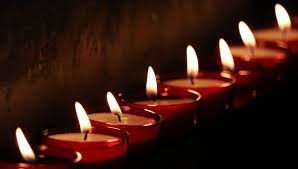
Sunday 2nd November 6:30pm.
The service provides a time and place for quiet prayer and reflection, so that we can remember before God all those we have loved who have died.
There is a list at the back of church for you to add the names of the loved ones you would like to be remembered.

Nineteenth Sunday After Trinity
For many of us God is an emergency service that we only contact when we are in dire need. This is true for the people in Jeremiah 14:7-10, 19-22. The land is suffering from severe drought and famine. Earlier in Jeremiah the well-off and the comfortable are criticised for carrying on without a thought for the impact of their actions on the poor but in this reading all the people are united in their suffering. Finally, they understand that they are ALL dependent on God, that they cannot be saved by their own efforts.
It is this acknowledgment of need and dependency that Jesus praises in the tax-collector in Luke 18:9-14. He knows that he is a sinner, he knows that he cannot remove his faults and weaknesses on his own. The pharisee, in contrast, is criticised. The pharisee is not a bad man. By most people’s standards he is a far better man than the tax-collector. He is giving away a tenth of his income in charity whereas the tax-collector was fleecing people for his own profit. Why, then, does God not justify him? It is not because his sins are worse than the tax-collector’s nor is it because God is any less ready to forgive his sins, it is because he doesn’t think he needs it. He thinks that his own actions have already justified him. God is ready to justify him – he is just not ready to ask or to receive.
The pharisee’s belief that his own actions make him perfect separates him from others, he judges them for not achieving what he has achieved. In just the same way, the well-off in Jeremiah had previously separated themselves from the less fortunate. If we have all, in St Paul’s words, fallen short of the glory of God, there is really no point trying to prove that some have fallen shorter than others. Religion is not a self-improvement programme. It is a relationship with God that draws into a relationship with others. We are all united in our radical dependency on God. The tax-collector comes to God pleading for help because he knows that he cannot save himself. In the words of Pope Francis, “blessing does not require moral perfection to be received”, it is given “to those who ask for he

Eighteenth Sunday After Trinity
We all long for a world of justice and peace but, as our readings reveal this morning, such a world does not come on its own. In Genesis 32:22-31 Jacob is stuck. He has taken his brother Esau’s birthright and fled but now he cannot move forward with his life until he faces what he has done and seeks forgiveness. First he faces a struggle. A struggle which leaves him both wounded but also blessed. Today, on Racial Justice Sunday, we acknowledge that we, like Jacob, often feel paralysed, overwhelmed by the many injustices in our world, unsure how to take meaningful action. We need to be reminded that such struggles bring their own blessing and by them we are transformed. The widow in Luke 18:1-8 is also struggling to find justice but refuses to give up her struggle even when justice seems an impossibility. Today we are grateful to Abigail Oyedele who is joining us from Citizens UK to encourage us with us examples of how people in our local community have transformed situations by their actions so that we too will not give up trusting that “the arc of history is long but it tends towards justice.”

Seventeenth Sunday After Trinity
This Autumn, the Church of England is celebrating
THE SEASON OF GENEROSITY.
A time set aside to give thanks for God’s gifts; to reflect on what it means to live with gratitude for all that we have and all that we are; and to commit ourselves to living generously.
At Holy Spirit we are dedicating three Sundays (from Sunday 28th September to Sunday 12th October) to the themes of this season: Generosity, Giving and Gratitude.
This week our final Week Three, 12th October, when we receive five of our young people into Communion, our theme will be GRATITUDE and how it shapes our lives and transforms our understanding of who we are.
Today, as our children receive their first communion, our focus is on gratitude. When Jesus heals ten lepers in Luke 17:11-19, only one gives thanks. The word used is the same word Jesus uses when he takes bread and wine at the Last Supper. It is the word from which the term Eucharist derives. God invites all of us to the table, each one of us has a place. Yet to take our place we must stand shoulder to shoulder with all those whom God invites. This is something which Naaman, in 2 Kings 5:1-3, 7-15, finds difficult. He is offended that a man of his wealth and status has been invited to take his place among the general public who come to wash in the Jordan River. His sense of entitlement very nearly prevents him from receiving the gift God is offering, it seems too humble, too ordinary to be of value. All of us come to God’s table in need, all of us are hungry for what God has to offer but often our egos and our own sense of what we deserve prevents us from receiving God’s abundant grace. When we stand shoulder to shoulder with our children around the Lord’s Table, we acknowledge that none of us are more worthy than anyone else, that all we have is a result, not of our efforts, but of God’s generosity and mercy. Knowing this, we can be truly grateful that we too are included in God’s grace and that we are privileged to invite others to join us at the Lord’s table.


Sixteenth Sunday After Trinity
This Autumn, the Church of England is celebrating
THE SEASON OF GENEROSITY.
A time set aside to give thanks for God’s gifts; to reflect on what it means to live with gratitude for all that we have and all that we are; and to commit ourselves to living generously.
At Holy Spirit we are dedicating three Sundays (from Sunday 28th September to Sunday 12th October) to the themes of this season: Generosity, Giving and Gratitude.
Week One, 28th September, focuses on GENEROSITY, what it means to be a people created and sustained by God’s generosity and how we might live generously in response.
Week Two, 5th October, celebrates GIVING as we hold our annual HARVEST THANKSGIVING and bring donations to support the work of the Ace of Clubs day centre and the Food Bank. In this week we reflect on how giving transforms the lives of those who give and those who receive.
Week Three, 12th October, when we receive five of our young people into Communion, our theme will be GRATITUDE and how it shapes our lives and transforms our understanding of who we are.
The story of the first ever Harvest Festival is told in Deuteronomy 26:1-11. The very first thing that the people are to do when they enter the land is to take the first fruits and share them. They are to offer them to God in recognition that all things come from God but they are also to celebrate God’s gifts by inviting all who live in the land, friend and stranger, foreigner and neighbour. Furthermore, they are also to remember that they too have been strangers, foreigners, enslaved, poor, they are to acknowledge our shared humanity, our shared need for God and one another.
This the gift that Jesus offers in John 6:25-35 when he declares that he is “the bread of life”. He has just fed 5,000 with 5 loaves and 2 fishes and yet the crowds do not understand: “you are looking for me, not because you saw signs but because you ate your fill of the loaves.” The bread was the sign, what it was pointing towards was community: the building of trust, the commitment to common well-being, the desire to share.
We are a people called to be in communion, with God, with creation and with one another. We share one bread and one cup as a symbol of our union. Just like the Israelites in the promised land we too are called to offer our first fruits, to give of what we have and of ourselves. Giving is life-affirming and life-giving not just for those who receive but also for those who give. We are a harvest made to share.
Season of Generosity
During this season - and to coincide with the national church’s Generosity Week - we celebrate God’s generosity and reflect on how we respond to the divine gifts upon which we depend for all that we are and all that we have.