

Safeguarding Sunday
We have a great Diocesan Safeguarding Team, excellent Parish Safeguarding Officers (Nicola and Zoe) and all of us who volunteer or lead are required to undergo checks and receive thorough Safeguarding training; yet, as 1 Corinthians 13:1-8a reminds us, if we have “all these things but do not have love we gain nothing”.
Not all of us are called to an official role in the church but we are ALL called to love and more than this, we are commanded to love, John 13:34-35, as Jesus loves us, without exception, without limits, without partiality.
Sadly, these readings have often been used to encourage those who have been wounded or harmed by the church to forgive and forget. But love requires that truth is spoken and justice is served.
Morning Prayer
From 5th October, Morning Prayer will be said in church on Mondays, Tuesdays, Wednesdays and Thursdays at 9am.
Black History Month: Honouring Our Communities, Sharing Our Stories
October is Black History Month, a time to celebrate the history, achievements and contributions of Black communities, while reflecting on the ongoing call for racial justice and equality. The Diocese of Southwark is marking the month with a range of services, events and resources that encourage learning, worship and community engagement.
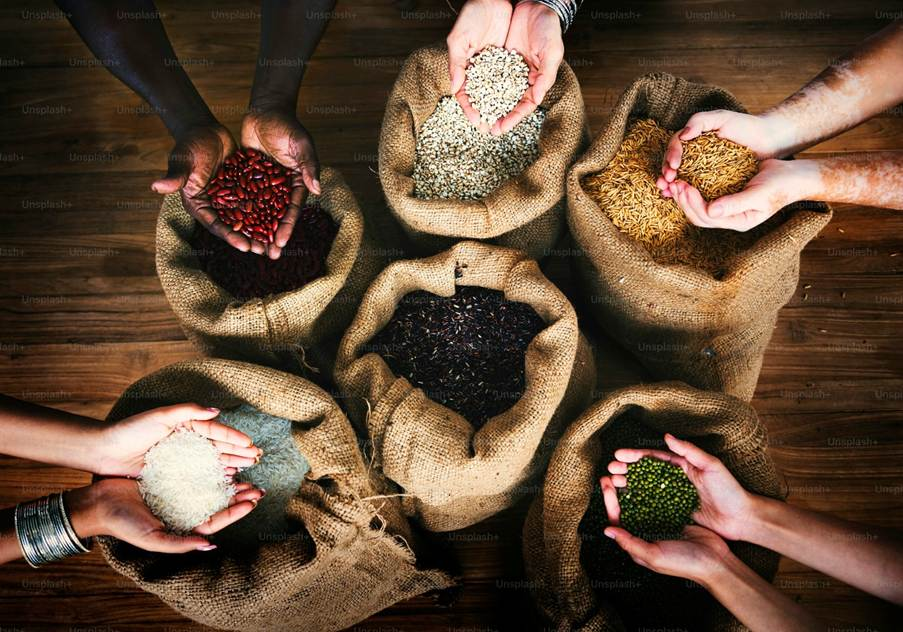
Harvest Festival & Baptism
Today we celebrate the harvest. We give thanks that we have been given all that we need to survive and thrive.
In a time of uncertainty, when harvest yields across the globe have fallen, this morning’s readings both celebrate abundant harvests:
Luke 12:16-21 tells the story of a man who had such a bumper crop that he needed a bigger barn. We might call him a success: someone who has produced abundantly. We might call him prudent: someone who has planned for the future. Jesus calls him a fool.

Clapham Book Festival
This year’s 10th anniversary Clapham Book Festival takes place on 17th October at the Omnibus Theatre, Clapham.
Seventeenth Sunday after Trinity
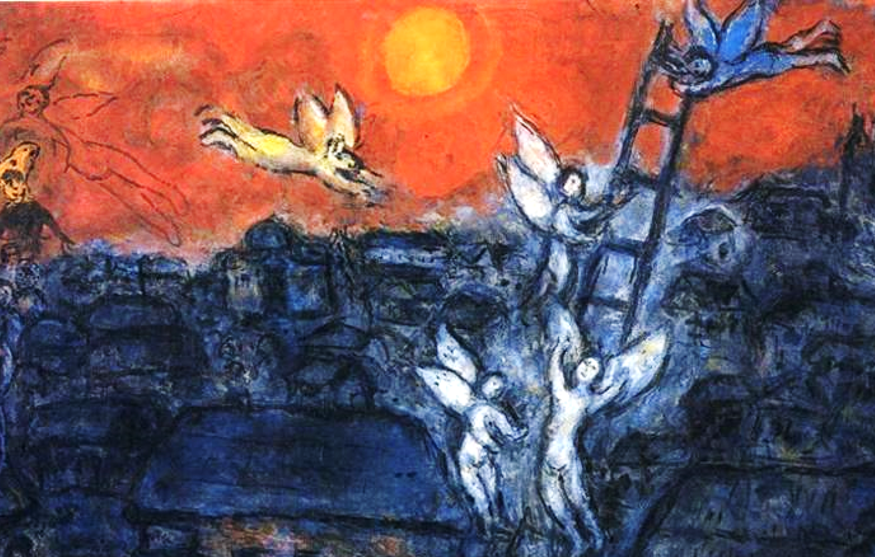
Today is the feast of St Michael and All Angels. Angels are God’s messengers and in both of our readings this morning they move between heaven and earth.
Jacob dreams of them going up and down a ladder in Genesis 28:10-17 and, although God promises to be with him wherever he goes, Jacob believes that the gate of heaven is in this particular place.
However, when Jesus meets Nathaniel in John 1:47-51, he describes himself as the ladder joining heaven and earth. The place where heaven and earth meet is not a holy place as envisaged by Jacob but is a living, breathing human being.

Sixteenth Sunday after Trinity
“The story of workers in the vineyard, in Matthew 20:1-16, is my all-time favourite parable because I need to be reminded that it’s not about me!
Of course, the workers who have “borne the burden of the day and endured the scorching heat” are furious when those “who worked only one hour” get paid the same amount.
Just as the prophet, in Jonah 3:10-4:11, is furious that God is prepared to show “abounding and steadfast love” to his enemies as well as to him.
We know that everything we are and everything we have is a gift from God. Yet we still act as if we must earn God’s grace and we still get annoyed when God is equally gracious to those who have clearly done nothing to earn it.

Fifteenth Sunday after Trinity
“How many times must I forgive my brother, as many as seven times?” Both readings this morning take issue with our need to count the cost of forgiveness.
In Genesis 50:15-21, Joseph’s brothers are afraid that Joseph will seek to “pay us back in full for all the wrong we did.” Whereas in Matthew 18:21-35, Peter wants to know the exact number of times he must forgive. When Jesus replies 77 times (or 7 times 70) he is not stipulating a higher number, he is ridiculing the very idea of keeping count.
In the parable he tells the slave owes the king 10,000 talents, an impossible number, a way of saying that, if we were counting, we would not reach the end of the numbers: it could be billions, trillions, gazillions. The point is that if God is keeping score, then we’re all doomed.
But God doesn’t count.

Fourteenth Sunday after Trinity
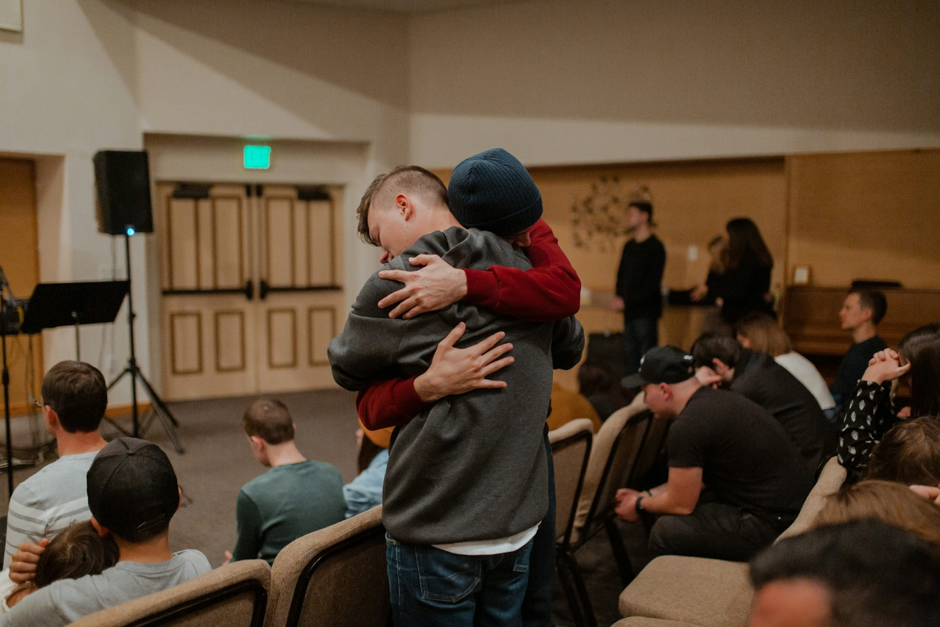
Jesus says, “if two of you agree on earth about anything you ask, it will be done for you by my Father in heaven”. Which would be great if we ever agreed on anything.
Today’s gospel, Matthew 18:15-20, does not seem like a great advertisement for the church community: a bunch of people pointing out each other’s faults and snitching on one another. But it is at least honest about one thing, being in community is hard work. The church is full of troublesome people and sometimes the troublesome people are us. Yet community is also where we thrive, where we find support and guidance, where we learn and grow.

Thirteenth Sunday after Trinity
Last week Peter was at the top of the class for declaring that Jesus was indeed the son of God. But this week, in Matthew 16:21-28, he is down at the bottom for failing to understand what it meant for Jesus to be the Christ.
The disciples have experienced miracles and wonders; they have been taught how to build a community that mirrors the kingdom of God. Now they are learning that this work comes at a cost as Jesus shares the news of his suffering and death.
Peter like Jeremiah, in our first reading Jeremiah 15:15-21, wants to know why suffering is necessary, do we have to struggle, must we lose our life in order to save it?

Twelfth Sunday after Trinity
“On this rock I will build my church”. But which rock, exactly, is Jesus talking about in Matthew 16:13-20? We assume that he means Peter because he has just given the right answer (and because his name means stone). But, in next week’s gospel, that same Peter will be called a stumbling block; still a rock but this time one that is in the way rather than a sure and strong foundation.
The particular rock on which Jesus and his disciples are standing is that of Caesarea Philippi. A place where God’s people had been tested before. A place where they had been asked to put their allegiance to the Roman Empire above their allegiance to God. A place where, those who chose God, faced defeat and death. A place where they were tested.
This conversation takes place just before Jesus predicts his own defeat and death.

Eleventh Sunday after Trinity
It’s not about us. It never was.
After the return from exile, the people of God had fierce debates about how to build their future. For some (e.g. Ezra and Nehemiah), it was all about them, they wanted to be holy, pure and observant and they wanted to include only other holy, pure and observant people in the new Israel. For Isaiah 56:1, 6-8, it was not about us, it was about God. In our first reading the prophet argues passionately for God’s inclusion of all people: “Thus says the Lord God, who gathers the outcasts of Israel, I will gather others to them besides.”
Who was in and who was out, who was worthy and who unworthy continued to be a source of debate.
Tenth Sunday after Trinity
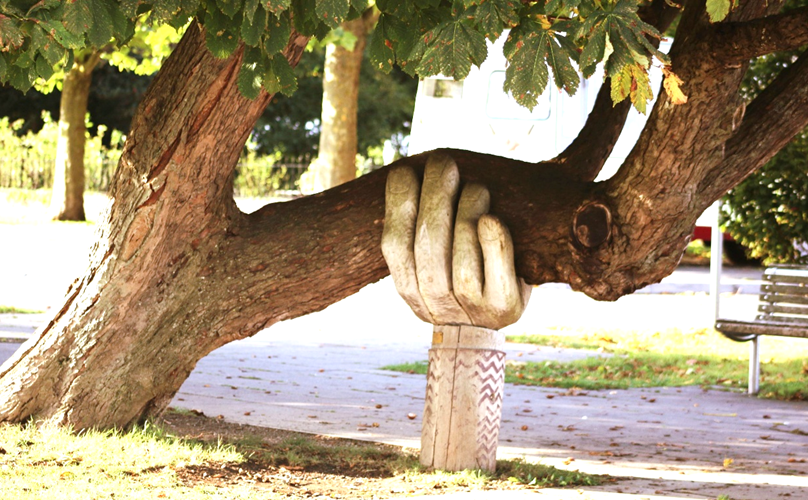
Elijah is knackered. Having publicly opposed the monarchy, started a jihad and slaughtered all the priests of the opposing religion, he flees from a death sentence. Collapsed In the desert he asks to die. At this precise moment, in 1 Kings 19:9-18, God shows up: provides him with food, water and rest and takes him to a place of safety.
The disciples have also exhausted their strength. Our translation of Matthew 14:22-33, tells us that they were “battered” by waves but the original Greek word is best translated as “violently tormented”. They are skilled and experienced sailors yet all their resources have failed. At this moment Jesus turns up and takes them to a place of safety.
What is interesting is how differently the prophet and the disciples respond.

Ninth Sunday after Trinity
Over the last three weeks we have heard a series parables that reveal how God’s perspective is often very different from our own: the seed is sown on rich soil and poor soil; the weeds are nurtured alongside the wheat; and all the fish, good and bad, are drawn into the same net. God, it seems, is not as picky as we are.
So, when feeding the 5,000, in Matthew 14:13-21, God works with whatever there is. The disciples state “we have nothing” yet Jesus still commands “bring it to me” and “all ate and were filled.”
But the most significant thing about this story is not the meagre rations but the leftovers. When the disciples collect all that was discarded, “the broken pieces”, they fill 12 baskets. Twelve symbolises God’s people, 12 tribes of Israel, 12 disciples, 12 full baskets representing the fulfilment of God’s promise.

Eighth Sunday after Trinity
How do we discern a person’s heart? How do we know good from evil? For the last two weeks we have heard parables that remind us that we are often not the best judge.
In the parable of the sower, the sower does not distinguish between the stony ground and good soil; in the parable of the wheat and weeds, the farmer allows both to grow together. This week, in Matthew 13: 31-33, 44-52, we have a similar parable about the nets of fish: all are gathered in, the good and the bad together.
The other parables this week give us an insight into why we are not to judge, our view and God’s view are not often the same.
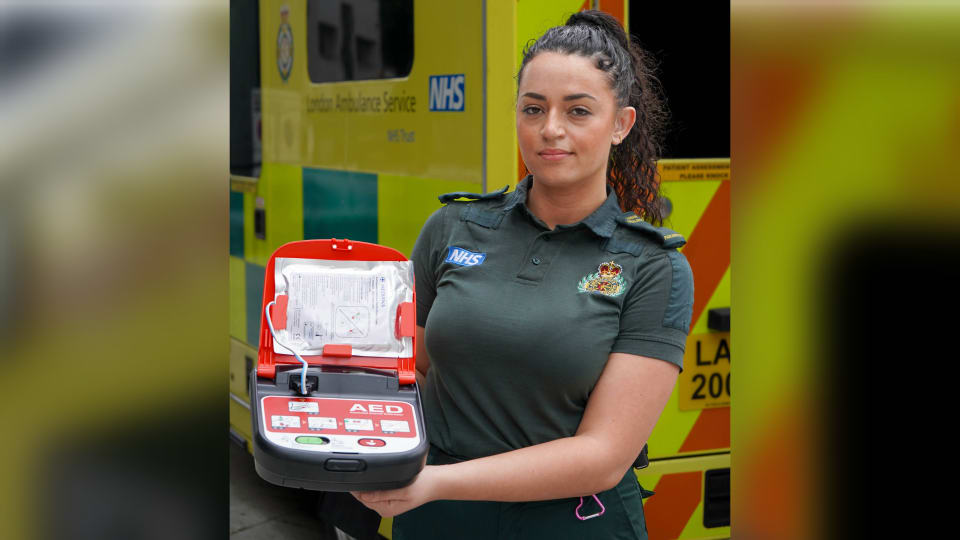
Defibrillator donated by LAS
We are delighted that a defibrillator has been donated to the church by the London Ambulance Service under their London Heart Starters campaign. The defibrillator is easy to use with recorded instructions.
Seventh Sunday after Trinity
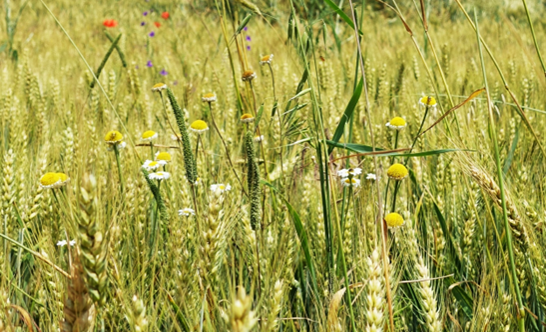
We are in the middle of a series of parables about seeds, weeds and growing things. The farmer in this week’s gospel, Matthew 13:24-30, 36-43, is as much of a maverick as last week’s (who scattered seed generously over all the ground whether the soil was good or bad) today the farmer allows the wheat and the weeds to flourish together in his field. The workers want to root out the weeds but the farmer forbids them. Both weeds and wheat grow from the same soil and to uproot one may also uproot the other.
The Greek word used for weed in this story is Zizania, a wild grain that looks very similar to wheat. It seems that it is difficult to distinguish good from bad grains and the same can be said for human beings.
Just like last week, this week’s gospel makes it clear that human beings are not the best judge and that any judging should be left in God’s hands.

Sixth Sunday after Trinity Celebrating Pride Sunday
Listen, a sower went out to sow” … we all know Matthew 13:1-9, 18-23, it is the parable of the sower. We tend to interpret it, however, as the parable of the soil. We wonder about our own soil: is our faith shallow like rocky ground? are we too choked with the cares and concerns of the world like thorny ground? We wonder even more about our neighbours’ soil: we compare and have opinions about who is bearing much fruit and who is bearing little. But it is the parable of the SOWER. It has something to say, not about us, but about God. Whilst we are busy judging whose soil is best and whose lives are the most fruitful, the sower blithely carries on scattering seed everywhere.
Today we celebrate Pride Sunday.